
Your Cart is Currently Empty: £0.00
The Science of Carb Loading: Does It Actually Improve Performance?
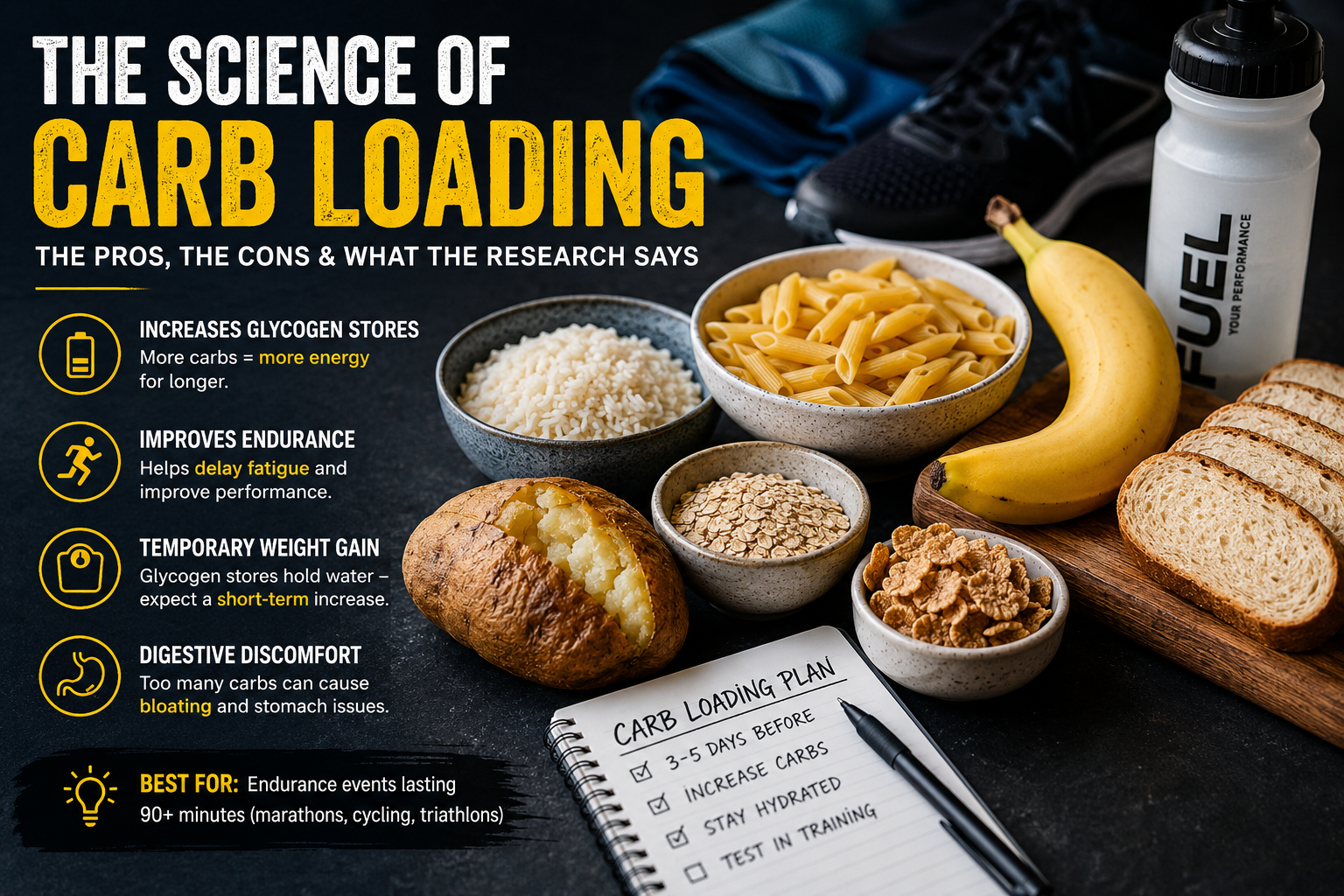
The Science of Carb Loading: Does It Actually Improve Performance?
Carbohydrates have long been considered the body’s preferred fuel source during high-intensity exercise. From marathon runners eating large bowls of pasta before race day to cyclists increasing their carbohydrate intake before long events, “carb loading” has become a well-known strategy among endurance athletes.
But does carb loading actually improve performance, or is it simply a fitness myth?
The science behind carbohydrate loading is well established, with research showing that increasing muscle glycogen stores before prolonged endurance events can help delay fatigue and improve performance. However, carb loading is not necessary for everyone and can come with some downsides if done incorrectly.
In this article, we explore what carb loading is, how it works, the benefits, potential drawbacks, and whether it is worth incorporating into your own training.
What Is Carb Loading?
Carbohydrate loading (or “carb loading”) is a nutritional strategy where an athlete increases their carbohydrate intake in the days leading up to an endurance event. The goal is to maximise the amount of glycogen stored in the muscles and liver.
Glycogen is the body’s stored form of carbohydrate and acts as a readily available energy source during exercise. A typical diet may store enough glycogen to fuel around 90 minutes of moderate-to-high intensity exercise. By increasing carbohydrate intake before a long event, athletes can significantly increase these stores.
This can be particularly beneficial for events such as:
- Marathons
- Long-distance cycling events
- Triathlons
- Long hikes
- Endurance races lasting over 90 minutes
How Does Carb Loading Work?
The science behind carb loading comes down to muscle glycogen storage. When you eat carbohydrates, they are broken down into glucose. Some glucose is immediately used for energy, while the remainder is stored as glycogen in the muscles and liver.
During prolonged exercise, glycogen stores gradually become depleted. As these stores run low, athletes often experience reduced energy levels, heavy legs, a slower pace, and increased perceived effort. This is commonly known as “hitting the wall”.
Carb loading aims to increase the amount of glycogen available before exercise, allowing you to maintain intensity for longer. Research has shown that increasing carbohydrate intake before endurance events can increase muscle glycogen stores beyond normal levels, potentially improving endurance performance.
How Much Carbohydrate Do You Need for Carb Loading?
Effective carb loading usually involves increasing carbohydrate intake for 24–72 hours before an event, with a general recommendation of 7–12g of carbohydrates per kg of body weight per day.
| Body Weight | Lower End (7g/kg) | Upper End (12g/kg) |
|---|---|---|
| 60kg | 420g carbs/day | 720g carbs/day |
| 70kg | 490g carbs/day | 840g carbs/day |
| 80kg | 560g carbs/day | 960g carbs/day |
| 90kg | 630g carbs/day | 1080g carbs/day |
Foods commonly used during carb loading include:
- Pasta
- Rice
- Potatoes
- Bread
- Oats
- Cereals
- Fruit
- Sports drinks
The aim is not simply to eat more food, but to increase carbohydrate intake while avoiding excessive fat and fibre, which can cause digestive issues.
The Benefits of Carb Loading
1. Increased Energy Availability
The biggest advantage of carb loading is increasing glycogen availability. More stored glycogen means your body has a larger energy reserve to draw from during prolonged exercise, helping maintain performance levels — particularly during the later stages of an endurance event.
2. Delays Fatigue
One of the main reasons endurance athletes fatigue is glycogen depletion. When glycogen levels become low, the body must rely more heavily on fat for energy. While fat is an excellent fuel source, it cannot provide energy as quickly as carbohydrates during higher-intensity exercise. Carb loading helps delay this point, allowing athletes to sustain a faster pace for longer.
3. Improved Race Performance
Studies have consistently shown that carbohydrate loading can improve endurance performance, particularly in events lasting longer than 90 minutes. For competitive athletes, even a small improvement in energy availability can make a significant difference.
4. Better Training Quality
Carbohydrates are not only important before events. Adequate carbohydrate intake during training can improve recovery and allow athletes to complete higher-quality sessions, especially during periods of intense training.
The Downsides of Carb Loading
1. Temporary Weight Gain
For every gram of glycogen stored, the body stores approximately 3 grams of water alongside it. This means an athlete may gain 1–3kg before an event due to increased glycogen and water storage. For endurance athletes, this is beneficial because the extra water contributes to hydration — but it can feel uncomfortable.
2. Digestive Issues
Eating large amounts of carbohydrates can cause bloating, stomach discomfort, gas, and changes in bowel movements. This is especially common when people suddenly increase carbohydrate intake without practising beforehand. Always test your carb-loading approach during training rather than trying something new before an important event.
3. Not Necessary for Shorter Workouts
Carb loading is often unnecessary for activities lasting less than 60–90 minutes, such as a 5km run, a gym session, or a short cycle ride. Most people already have sufficient glycogen stores for these activities and a normal balanced diet is more than adequate.
4. Can Lead to Excess Calories
Carbohydrates contain calories, and eating significantly more than your body requires can result in fat gain if done frequently. Carb loading should be viewed as a performance strategy rather than an excuse to consume unlimited high-calorie foods.
Who Should and Shouldn’t Carb Load?
| Carb Loading IS Beneficial | Carb Loading IS NOT Necessary |
|---|---|
| Marathons and half marathons | 5km or 10km runs |
| Long-distance cycling events | General gym sessions |
| Triathlons | Weightlifting sessions |
| Endurance events over 90 minutes | Short workouts under 60 minutes |
| High-intensity competition | Fat-loss phases |
Best Foods for Carb Loading
Pasta
A classic carb-loading food — high in carbohydrates and easy to consume in large portions without causing digestive issues.
Rice
Versatile, low in fibre, and easy on the stomach. An excellent choice in the 24 hours before an event.
Potatoes
A nutrient-rich carbohydrate source that also contains potassium and other useful minerals.
Bread and Bagels
Convenient sources of carbohydrates, especially before morning events when time is limited.
Bananas
A simple, portable carbohydrate source that also provides potassium to support muscle function.
Oats and Cereals
Useful options earlier in the day when you have more time for digestion before your event.
Final Verdict
Carb loading is not a fitness fad — it is a scientifically supported strategy used by endurance athletes worldwide. By increasing muscle glycogen stores before long-duration events, athletes can improve energy availability, delay fatigue, and potentially enhance performance. However, it is not a requirement for every workout and is best reserved for endurance events lasting longer than 90 minutes.
Like most areas of nutrition, the key is using the right strategy at the right time. For shorter activities, a balanced diet with adequate carbohydrate intake is usually enough.
For endurance athletes preparing for a major event, carb loading could be the difference between maintaining performance and running out of energy when it matters most.
Explore Supplements at The Right Whey →
kvqvervlwgzxqjzhxffkygeesotops