
Your Cart is Currently Empty: £0.00
Calorie Counting Explained: How It Works for Weight Loss & Muscle Gain
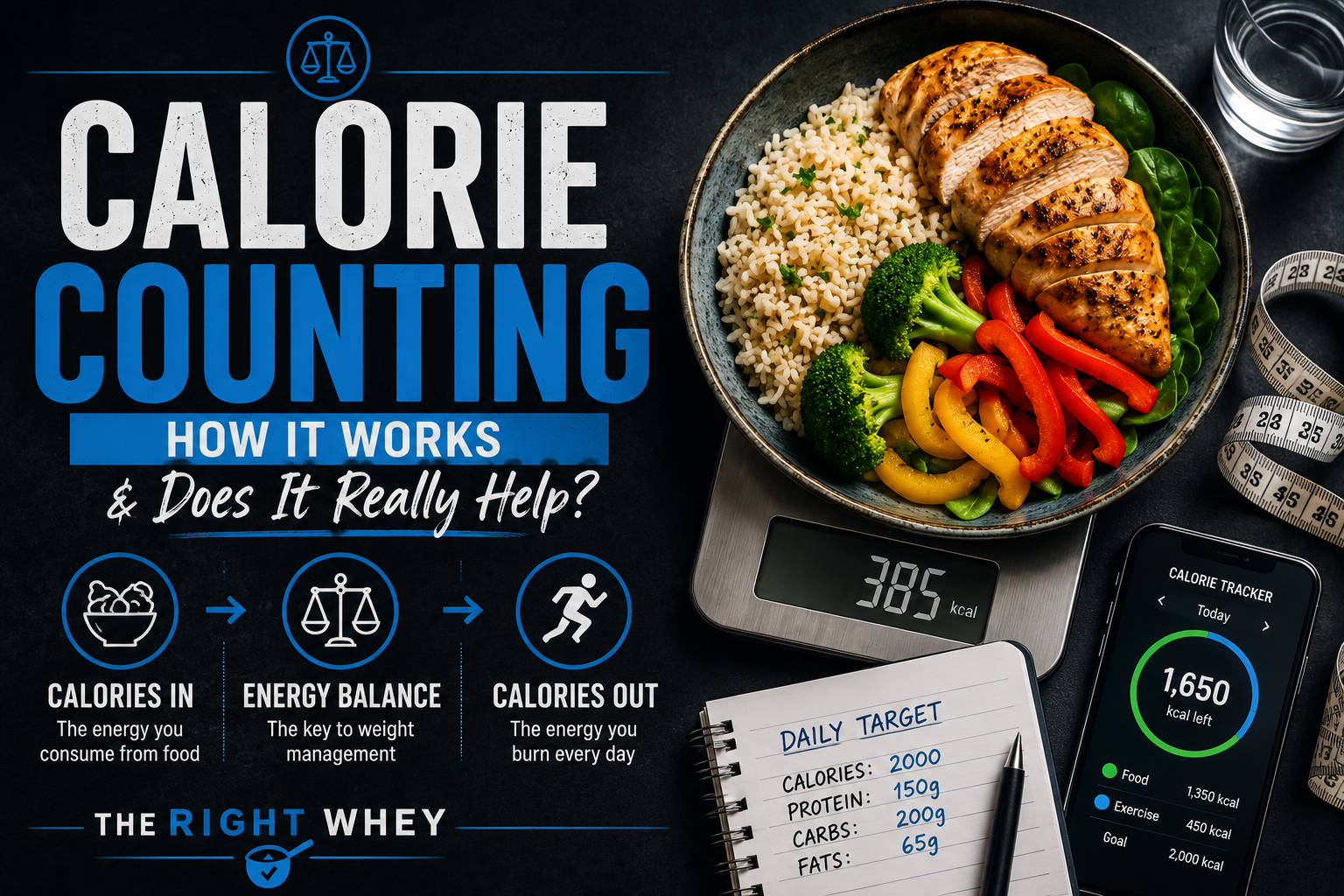
Calorie Counting Explained: How It Works and Does It Really Help?
Whether you’re trying to lose weight, build muscle, or simply eat healthier, you’ve probably heard the phrase “calories in, calories out.”
But what does it actually mean?
Some people swear by calorie counting, while others argue it’s unnecessary or too restrictive. The truth lies somewhere in the middle.
Understanding how calories work can help you make better food choices and achieve your fitness goals without following fad diets or cutting out your favourite foods.
In this guide, we’ll explain what calories are, how calorie counting works, the science behind weight management, and whether counting calories is the right approach for you.
What Is a Calorie?
A calorie is simply a unit of energy. More specifically, the calories you see on food labels are kilocalories (kcal), which measure how much energy your body can obtain from food and drink.
Your body uses this energy to:
- Keep your heart beating
- Power your brain
- Support breathing
- Digest food
- Fuel physical activity
- Repair muscles and tissues
Even if you spent an entire day lying in bed, your body would still burn calories to keep you alive.
Where Do Calories Come From?
Calories come from the three main macronutrients:
| Macronutrient | Calories Per Gram |
|---|---|
| Protein | 4 kcal |
| Carbohydrates | 4 kcal |
| Fat | 9 kcal |
| Alcohol | 7 kcal |
Fat contains more than twice as many calories per gram as protein or carbohydrates, which is why high-fat foods are often more calorie-dense.
The Theory Behind Calorie Counting
At its simplest, body weight is influenced by energy balance. Your body is constantly taking in energy through food and using energy throughout the day. There are three possible outcomes:
Calorie Deficit
If you consistently consume fewer calories than your body uses, your body will draw on stored energy — primarily body fat — to make up the difference. Over time, this generally leads to weight loss.
Calorie Maintenance
If you consume roughly the same number of calories that your body burns, your weight is likely to remain relatively stable. Small fluctuations from day to day are normal and are often caused by changes in hydration or food intake.
Calorie Surplus
If you consistently eat more calories than your body needs, the excess energy is stored. Combined with appropriate resistance training, a modest surplus can support muscle growth. Without sufficient training, much of the excess energy is more likely to be stored as body fat.
How Many Calories Do You Burn Each Day?
Your total daily energy expenditure (TDEE) is made up of four main components:
Basal Metabolic Rate (BMR)
Your BMR is the number of calories your body burns at complete rest. It supports essential functions such as breathing, blood circulation, brain function, body temperature regulation, and cell repair. For most people, BMR accounts for 60–70% of daily calorie expenditure.
Physical Activity
This includes walking, running, weight training, cycling, and sports. The more active you are, the more calories you’ll generally burn.
Thermic Effect of Food (TEF)
Digesting food requires energy. Protein has the highest thermic effect, carbohydrates are moderate, and fat has the lowest. This is one reason high-protein diets are often recommended during weight loss.
Everyday Movement (NEAT)
NEAT stands for Non-Exercise Activity Thermogenesis. This includes activities such as:
- Walking around the office
- Gardening
- Cleaning
- Standing
- Taking the stairs
- Fidgeting
For some people, NEAT can account for hundreds of calories burned each day.
Does Every Calorie Count the Same?
From an energy perspective, one calorie is one calorie. However, different foods can affect your body differently.
200 calories of chicken breast will generally keep you fuller for longer than 200 calories of sweets because it provides more protein and nutrients. Likewise, foods high in fibre often promote satiety more effectively than highly processed snacks.
So while calorie balance is important for weight management, food quality also plays a major role in health, appetite, and long-term adherence.
Why Protein Matters When Counting Calories
If you’re trying to lose fat, protein deserves special attention. A higher protein intake may help:
- Preserve muscle during weight loss
- Increase feelings of fullness
- Support recovery after exercise
- Promote muscle growth when combined with resistance training
Many people find that increasing protein makes it easier to stick to a calorie-controlled diet.
Do You Need to Count Calories?
Not necessarily. Some people achieve excellent results without tracking food. Others find calorie counting provides structure and helps them understand how much they’re actually eating.
You may benefit from counting calories if you:
- Want to lose weight
- Are trying to gain muscle without excessive fat gain
- Have hit a weight-loss plateau
- Enjoy tracking progress
- Want to learn more about portion sizes
How to Count Calories
Tracking calories is simpler than ever thanks to smartphone apps. The basic process is:
- Estimate your daily calorie needs
- Set a goal (lose, maintain or gain weight)
- Log everything you eat and drink
- Monitor your progress over several weeks
- Adjust your calorie intake if necessary
Remember that calorie estimates on food labels and fitness trackers aren’t perfect. Use them as guides rather than exact measurements.
Common Mistakes When Counting Calories
Ignoring Drinks
Soft drinks, alcohol and speciality coffees can add hundreds of calories without making you feel full.
Forgetting Cooking Oils
A tablespoon of olive oil contains around 120 calories. These can easily be overlooked when tracking.
Not Weighing Portions
Guessing portion sizes often leads to inaccurate tracking. Using kitchen scales for a short period can help improve accuracy significantly.
Focusing Only on Calories
Eating 2,000 calories of highly processed food isn’t the same as eating 2,000 calories from a balanced diet rich in fruit, vegetables, lean protein and whole grains. Nutrition quality still matters.
Can You Eat Anything If It Fits Your Calories?
Technically, yes. You could lose weight while eating mostly chocolate if you maintained a calorie deficit. However, this approach would likely leave you feeling hungry, reduce nutrient intake, make it harder to recover from exercise, and be difficult to maintain long term.
Most people achieve better long-term results by prioritising nutrient-dense foods while still allowing room for occasional treats.
Is Calorie Counting Accurate?
Calorie counting isn’t perfect. Food labels can vary slightly, restaurant meals are difficult to estimate precisely, and calorie burn from exercise is often overestimated.
The goal isn’t perfection — it’s consistency. Tracking your intake over several weeks provides a much clearer picture than focusing on a single day.
Frequently Asked Questions
Should I Count Calories Forever?
Probably not. Many people use calorie counting as a learning tool until they become more familiar with portion sizes and their eating habits.
Can You Build Muscle Without Counting Calories?
Yes. However, tracking your intake can make it easier to ensure you’re eating enough to support muscle growth.
Can You Lose Weight Without Counting Calories?
Absolutely. Many successful weight-loss strategies naturally reduce calorie intake without requiring people to log every meal.
Are Low-Calorie Foods Always Better?
Not necessarily. Healthy foods such as nuts, avocado and olive oil are relatively high in calories but also provide valuable nutrients and healthy fats. The key is balancing calorie intake with nutritional quality.
Final Verdict
Calorie counting isn’t a magic solution, but it is a practical tool that can help you better understand your eating habits and manage your weight. If you consistently consume more energy than your body uses, you’re likely to gain weight. If you consistently consume less, you’re likely to lose weight.
That said, not all calories are equal when it comes to nutrition, satiety and overall health. A balanced diet rich in lean protein, fruit, vegetables, whole grains and healthy fats will generally support your goals far better than focusing on calories alone.
Whether you choose to track every meal or simply become more mindful of your food choices, understanding calorie balance gives you a solid foundation for making informed decisions.
At The Right Whey, we’re here to help you make those decisions by providing evidence-based guides and comparing supplements that can support your nutrition goals.
Explore Supplements at The Right Whey →