
Your Cart is Currently Empty: £0.00
Are BCAAs Worth It?
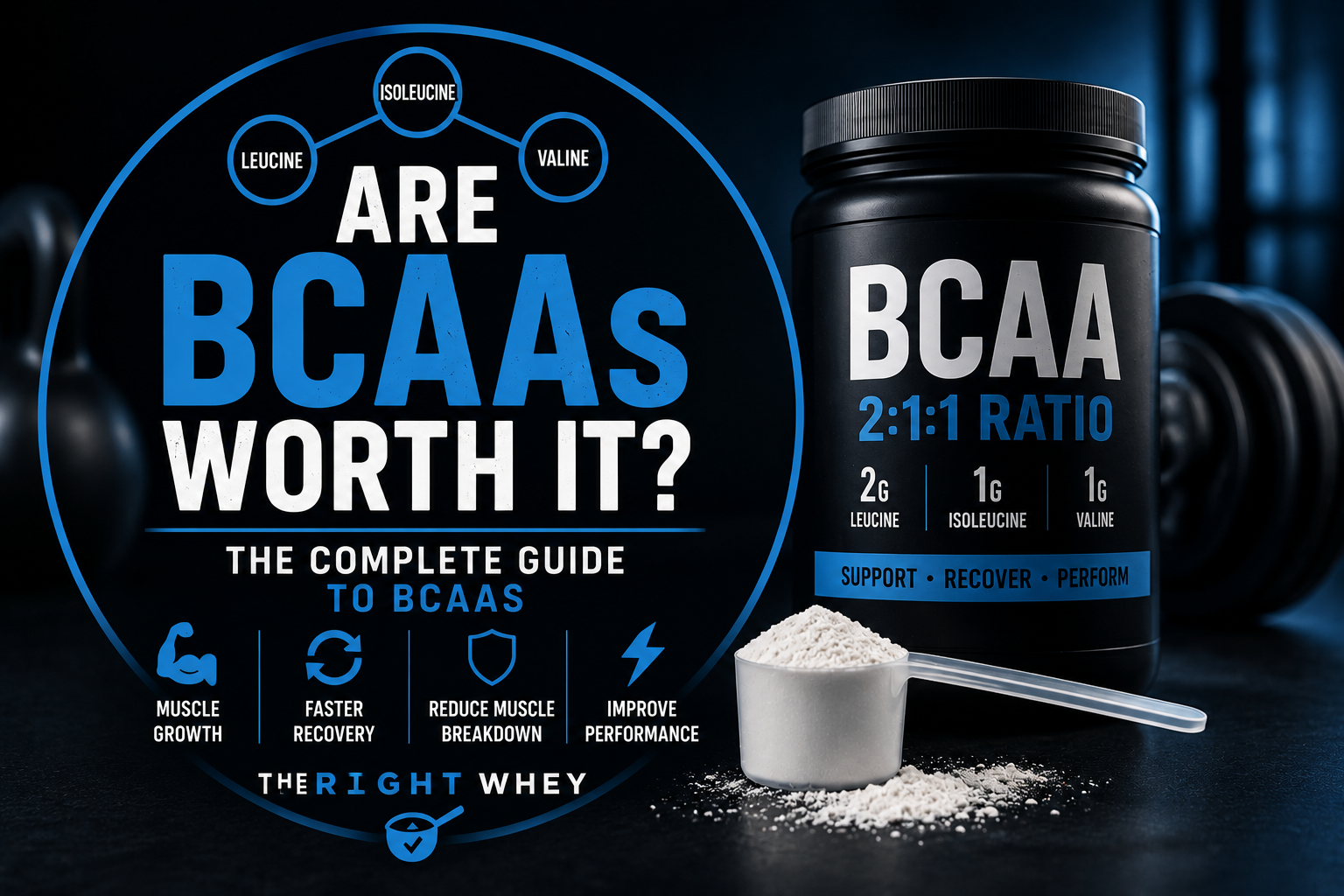
Are BCAAs Worth It? Everything You Need to Know Before You Buy
Branched-Chain Amino Acids, better known as BCAAs, have been one of the most popular sports supplements for over a decade.
At one point, they were found in almost every gym bag. Fitness influencers promoted them as essential for building muscle, speeding up recovery, and preventing muscle loss.
But with more research now available, many people are asking the same question — are BCAAs actually worth buying?
In this guide, we’ll explain what BCAAs are, how they work, what the latest evidence says, and whether they deserve a place in your supplement routine.
What Are BCAAs?
BCAAs are three essential amino acids:
- Leucine
- Isoleucine
- Valine
They’re called branched-chain amino acids because of their unique chemical structure. Unlike some amino acids, your body cannot produce BCAAs on its own, meaning they must come from food or supplements.
Why Are BCAAs Important?
Protein is made up of twenty different amino acids. Nine of these are known as essential amino acids (EAAs) because they must be obtained through your diet. The three BCAAs make up a significant proportion of the amino acids found in muscle tissue and play important roles in:
- Muscle repair
- Muscle growth
- Exercise recovery
- Reducing muscle breakdown during exercise
What Does Each BCAA Do?
Leucine
Leucine is by far the most important BCAA. It acts as the primary trigger for muscle protein synthesis — the process your body uses to build and repair muscle. Without enough leucine, muscle growth is limited.
Isoleucine
Isoleucine helps support energy production, assist muscle recovery, and improve glucose uptake during exercise.
Valine
Valine contributes to muscle repair, energy production, and exercise performance. Although all three work together, leucine is considered the star of the group.
What Are BCAA Supplements?
BCAA supplements typically contain these three amino acids in ratios such as 2:1:1 (most common), 4:1:1, or 8:1:1. The numbers represent the amount of leucine relative to isoleucine and valine. Most research has been conducted using the 2:1:1 ratio, which remains the most evidence-based option.
What Are the Claimed Benefits?
Manufacturers often claim BCAAs can:
- Build muscle
- Improve recovery
- Reduce muscle soreness
- Reduce fatigue
- Prevent muscle loss
- Improve endurance
Some of these claims are supported by evidence — others are less convincing.
Do BCAAs Build Muscle?
This is where things become interesting. BCAAs can stimulate muscle protein synthesis because of their leucine content. However, building muscle requires all nine essential amino acids — not just three.
Imagine trying to build a house with only bricks. You still need timber, cement, windows and a roof. The same principle applies to muscle growth. Leucine may “switch on” muscle building, but without the remaining essential amino acids, your body cannot maximise muscle protein synthesis.
Whey Protein Already Contains BCAAs
This is one of the biggest reasons many experts no longer recommend standalone BCAA supplements. A typical serving of whey protein naturally provides all nine essential amino acids, around 5–6g of naturally occurring BCAAs, and approximately 2.5g of leucine.
In other words — if you’re already drinking whey protein, you’re already getting plenty of BCAAs.
Can BCAAs Improve Recovery?
Research suggests BCAAs may slightly reduce muscle soreness following intense exercise. However, these improvements tend to be relatively small. A complete protein source such as whey protein generally provides superior recovery because it supplies every amino acid your body requires.
Can BCAAs Prevent Muscle Loss?
Possibly. During long training sessions or periods of calorie restriction, BCAAs may help reduce muscle protein breakdown. However, maintaining adequate daily protein intake remains far more important.
Are BCAAs Useful During Fasted Training?
This is one situation where BCAAs may have a role. People who train first thing in the morning without eating sometimes use BCAAs beforehand, as they may help reduce muscle breakdown while training. That said, many sports nutrition experts now recommend essential amino acids (EAAs) instead, as they provide the complete range of amino acids needed for muscle protein synthesis.
BCAAs vs EAAs vs Whey Protein
Here’s how the three compare side by side:
| Supplement | Amino Acids Provided | Best For |
|---|---|---|
| BCAAs | 3 (Leucine, Isoleucine, Valine) | Fasted training, low protein intake |
| EAAs | All 9 essential amino acids | Better muscle protein synthesis than BCAAs |
| Whey Protein | All 9 essential amino acids + more | Muscle growth, recovery, best overall value |
Who Might Benefit from BCAAs?
BCAAs may still be useful for:
- Athletes training fasted
- Individuals consuming very low amounts of protein
- People who dislike protein shakes
- Vegans with limited protein intake (although EAAs may still be preferable)
Who Probably Doesn’t Need Them?
Most gym-goers who eat enough protein, drink whey protein, or consume meat, fish, eggs or dairy are already getting plenty of BCAAs every day. In these cases, purchasing standalone BCAA supplements is unlikely to provide significant additional benefits.
Are There Any Side Effects?
For healthy adults, BCAA supplements are generally considered safe. Occasionally, some users report mild digestive discomfort, nausea, or stomach upset. These side effects are uncommon and usually mild.
Frequently Asked Questions
Can I Take BCAAs Every Day?
Yes. However, if your daily protein intake is already sufficient, they may offer little additional benefit.
Should I Take BCAAs Before or After a Workout?
If using BCAAs, most people take them before or during training. Timing appears to be less important than total daily protein intake.
Can I Mix BCAAs with Creatine?
Yes. The two supplements serve different purposes and can be taken together without any issues.
Are BCAAs Better Than Protein Powder?
For most people, no. Protein powder contains BCAAs naturally, along with the remaining essential amino acids required for muscle growth.
So… Are BCAAs Worth It?
For most people — probably not. If you’re already consuming enough high-quality protein from foods like chicken, eggs, fish, dairy or whey protein, you are almost certainly getting all the BCAAs your body needs.
That doesn’t mean BCAAs are ineffective. They do have legitimate roles in muscle protein synthesis and recovery. The issue is that they rarely provide benefits beyond what a complete protein source can already deliver.
For the majority of gym-goers, spending your money on whey protein, creatine or even a quality pre-workout is likely to produce better results.
Final Verdict
BCAAs were once considered an essential supplement for muscle growth and recovery, but our understanding of sports nutrition has evolved. While the three branched-chain amino acids — leucine, isoleucine and valine — play important roles in muscle function, most people already consume enough of them through a balanced diet or a daily whey protein shake.
Unless you’re training fasted, struggling to meet your protein intake, or have specific dietary restrictions, standalone BCAA supplements are unlikely to provide significant additional benefits.
At The Right Whey, we compare BCAA supplements, whey protein, and other sports nutrition products from leading UK brands to help you decide what’s genuinely worth your money.
Compare BCAAs at The Right Whey →